Tiruchirappalli, Tamil Nadu · A public charitable trust since 1986
We live for others
What we run
Three programmes, one family at a time
Rural education
Education
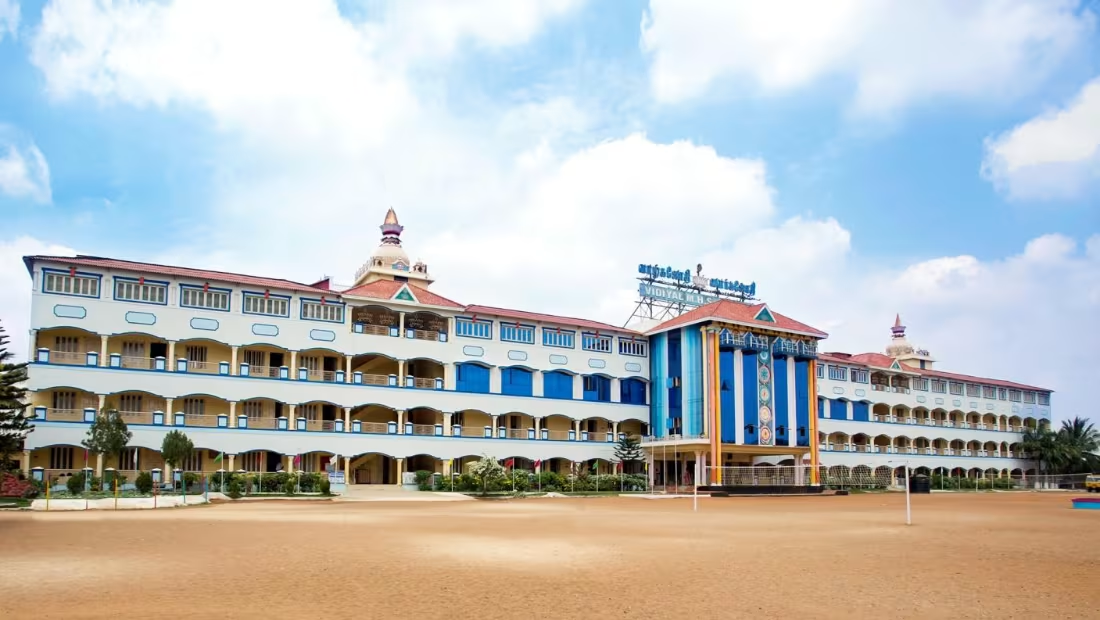
Vidiyal Matriculation Higher Secondary School, alternate schooling, and computer literacy camps.
Read more →
Skills
Market linkage and training
Skill development, entrepreneurship training and market linkage for member-made goods.
Read more →
Health
Health campaign
Health education and awareness, free medical and eye camps, and Annadhanam.
Read more →
840
students in the academic year 2025
Rural education
Vidiyal school, and a second chance at class
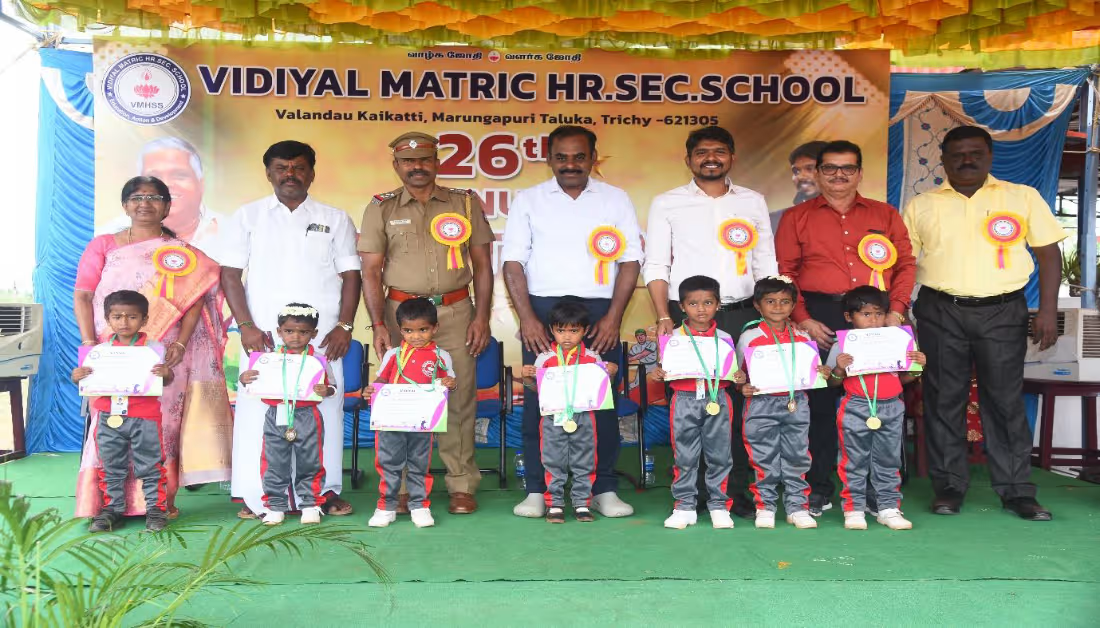
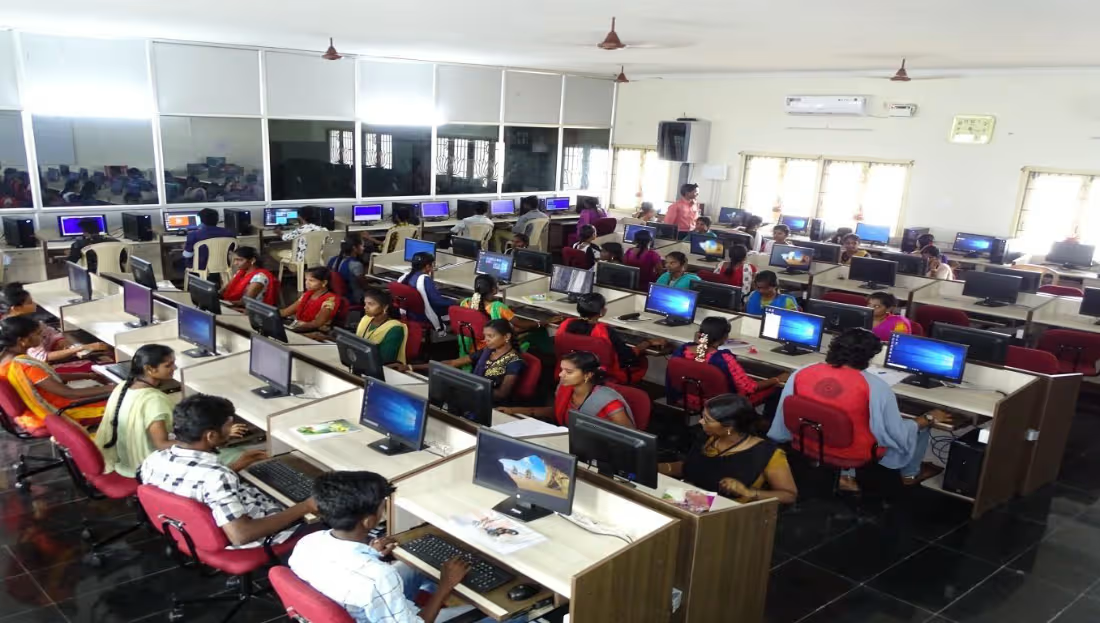
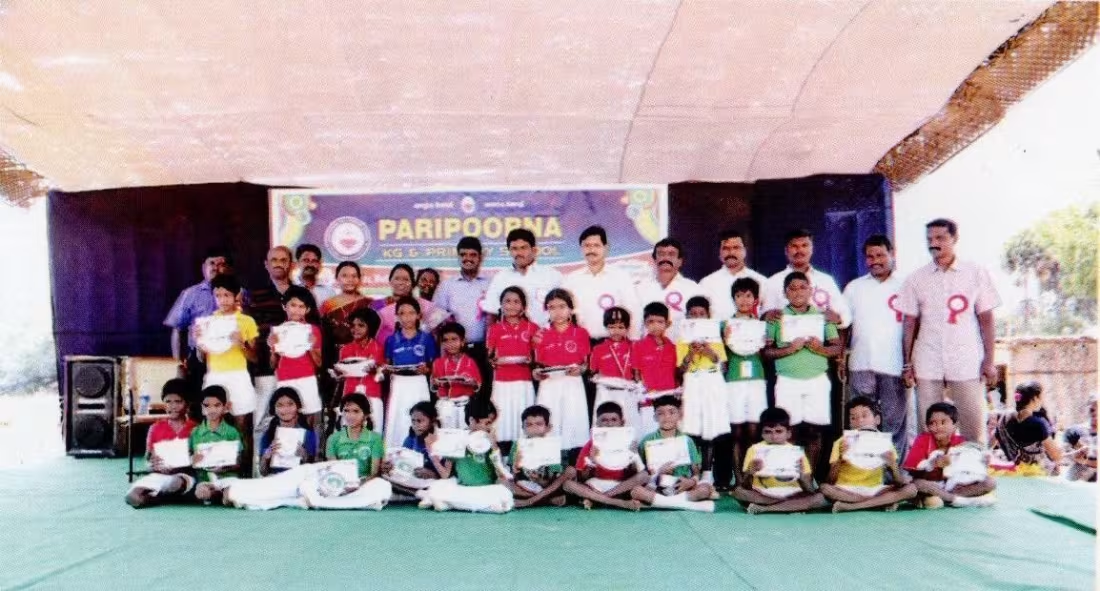
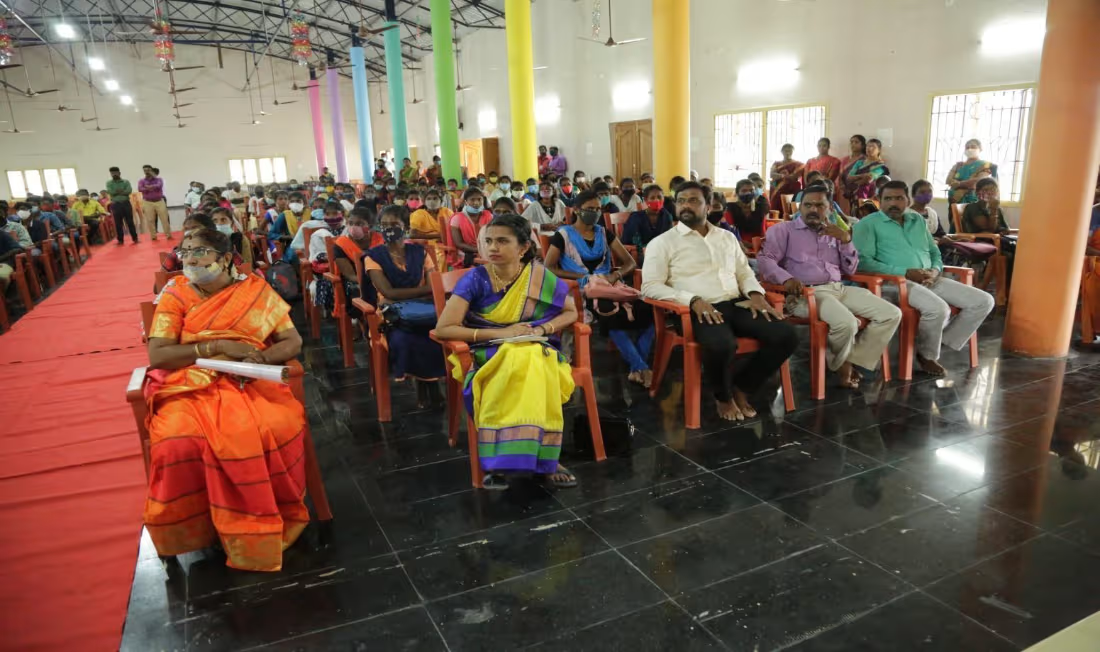
Vidiyal Matriculation Higher Secondary School was started in 2000 at Valandau Kaikatti, beginning with a mere twenty-six students. Alongside it run alternate schooling centres under the child labour eradication programme, and computer literacy camps for the children of the women members.
-
✓
840 students from L.K.G. to Class XII on subsidised tuition fees, with 40 teaching and 59 non-teaching staff.
-
✓
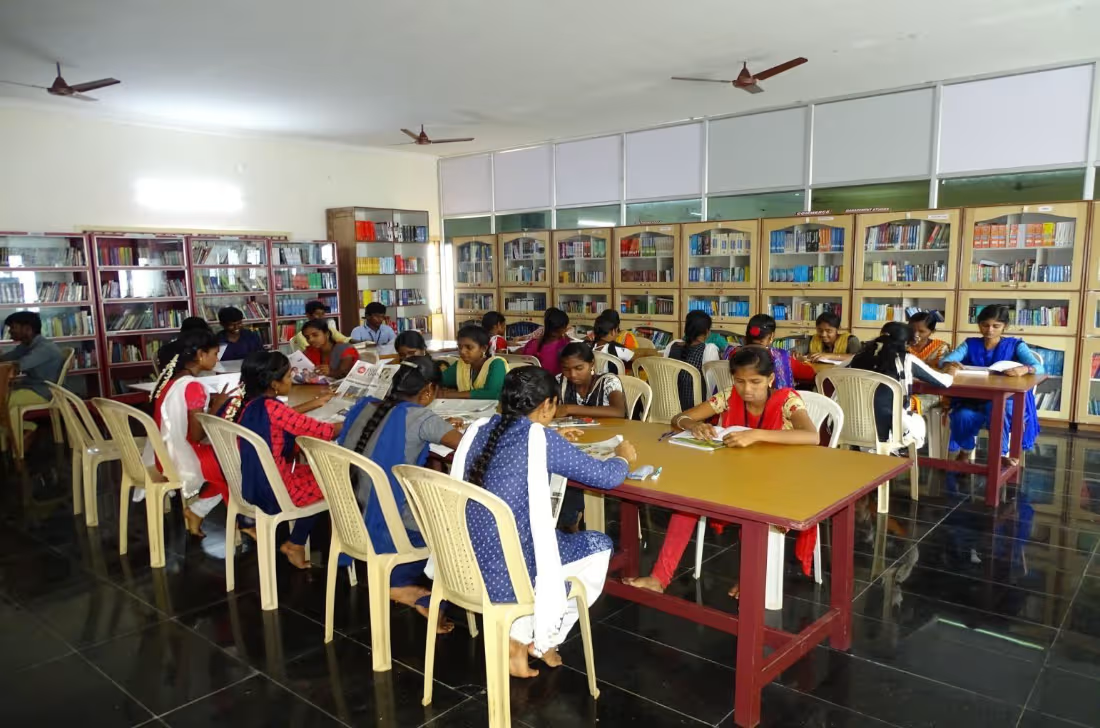
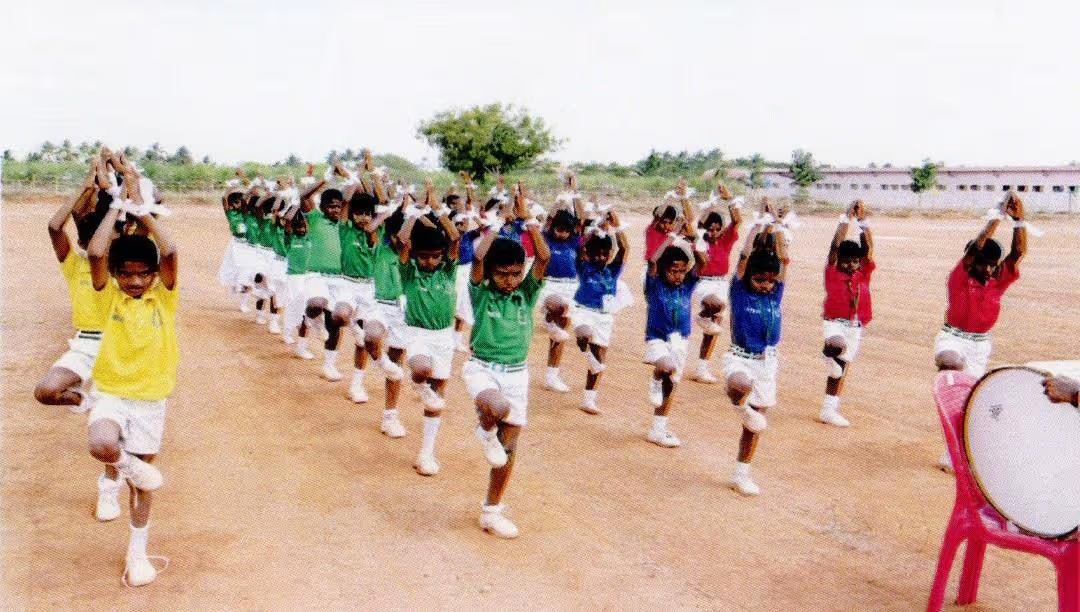
Free noon meals, hostel facility, modern transport, an indoor and outdoor stadium and a meditation hall.
-
✓
6,789 children benefited through 357 computer literacy camps.
32
districts of Tamil Nadu covered
Market linkage and training
Market linkage, and the skills to use it
ASA’s prime focus is the promotion of self-employment for people below the poverty line. Efforts have been taken to market the products produced by its members: ASA provides material aid like brand labels and flex sheets printed with the ASA logo, which helps them yield profit and removes the hindrance of middlemen and agents.
-
✓
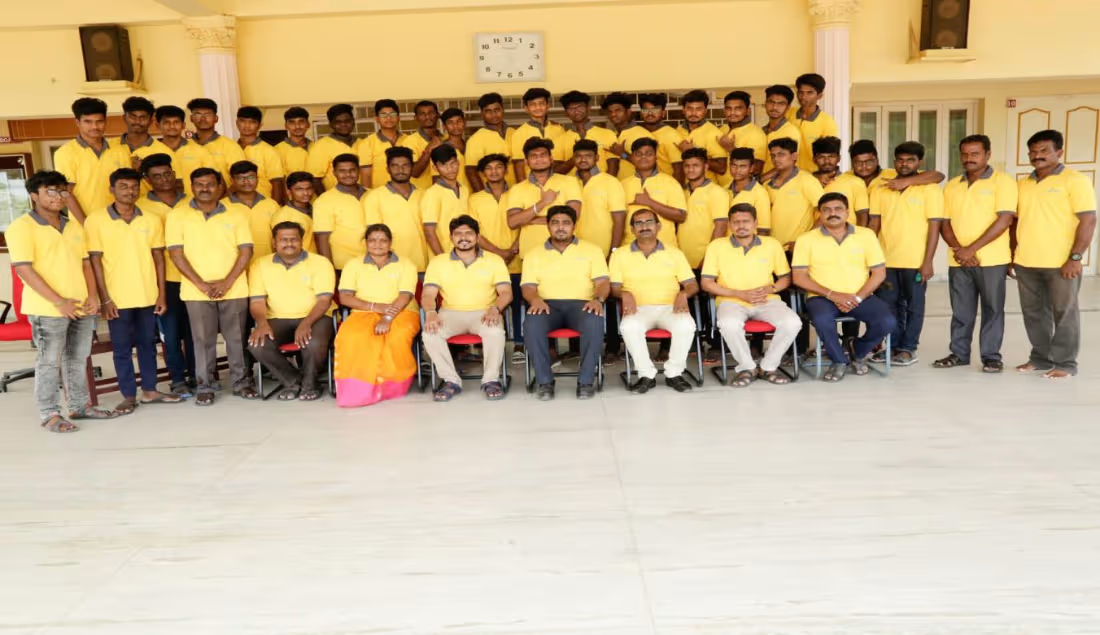
155 skill development programmes, with nearly 624 teams participating.
-
✓
More than 9,360 youth across all 32 districts of Tamil Nadu.
-
✓
Entrepreneurship training covering finance, marketing, consumer behaviour, business ethics and accounting.
2 lakh
people fed at Annadhana Koodam in the year
Health campaign
Health education, camps and Annadhanam
ASA primarily focuses on health issues, especially for its members and their families. A health awareness programme provides health education and awareness training to women members. Free medical check-up camps and eye camps are conducted for the rural poor, alongside preventive and curative health and hygiene programmes.
-
✓
Free medical check-up camps and eye camps for the rural poor.
-
✓
Health education and awareness training programmes for women members.
-
✓
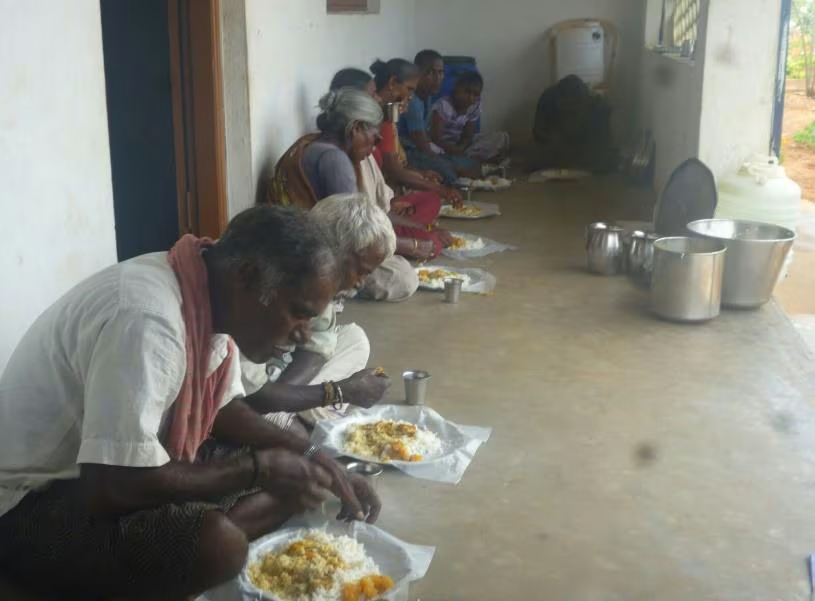
Nearly two lakh people benefited from the Annadhana Koodam Annadhanam centre during the year.
How it works
The path a family takes with us
The way the trust approaches every programme.
Identify the issue
Identifying the issue, researching and finding a solution through data mining and consultation.
Plan and implement
Formulation of a time-based action plan and proper implementation of services to the targeted people.
Train and equip
Entrepreneurship training in finance, marketing, consumer behaviour, business ethics and accounting, with study materials, food and refreshments provided.
Link to the market
Brand labels and flex sheets printed with the ASA logo, so members yield profit without middlemen and agents.
A WASH initiative supported by water.org, USA
Access to Safe Water & Sanitation (ASAS)
With the aim of providing adequate safe drinking water and hygienic sanitation facilities to the rural population of Tamil Nadu, ASA partnered with water.org for the programme ASAS – Access to Safe Water and Sanitation.
With the support of water.org, ASA has successfully implemented this water credit model and covered more than 15,000 families in the Phase I project in the southern districts of Tamil Nadu. The Phase II project scales up similar work in 28 districts covering 232 branches around Tamil Nadu to reach 1,00,000 women members.
-
27,100
households with improved water connections in one year
-
5,900
households with improved access to hygienic toilets
-
1,50,000
people benefited and sensitised through awareness programmes
-
232
branches across 28 districts of Tamil Nadu in Phase II
Baseline survey, market demand assessment and WASH sensitisation meetings
The formal agreement for the Phase II project was signed in July 2016 to initiate the project in 28 districts of Tamil Nadu. The main objective is to provide microloans and awareness programmes to communities that have no access to water and hygienic sanitation facilities. A baseline survey was conducted among 800 beneficiaries in 12 branches in and around the Salem and Covai regions by Sambodhi, a third-party Mumbai-based consulting agency. Similarly, a market demand study was conducted with the support of a Trichy-based NGO. The final survey report was submitted to water.org.
Member training and awareness on WASH education programme
ASA has built networks with community members, village leaders, women members and panchayat members, and helped them understand their persistent need for improved water and sanitation facilities. These communities were made aware through various IEC and media promotional activities. A few effective leaders were selected as health confederation leaders and trained in issues related to water and sanitation.
Further awareness campaigns on different aspects of safe drinking water and hygienic sanitation in rural areas, through cultural programmes, health games, street shows and mime, have also been carried out to bring about behavioural change and to create demand for individual household toilets and access to safe water.
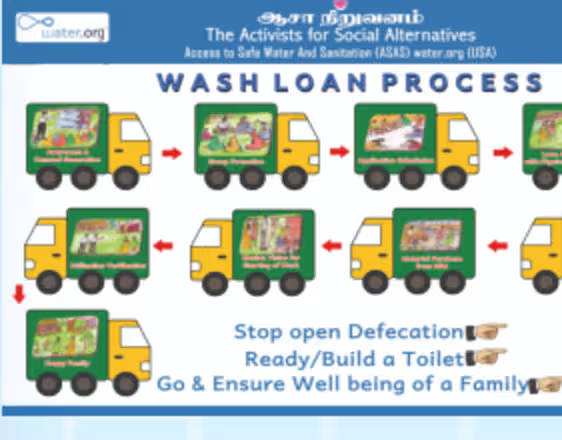
The WASH loan process, from stopping open defecation to ensuring the well-being of a family.
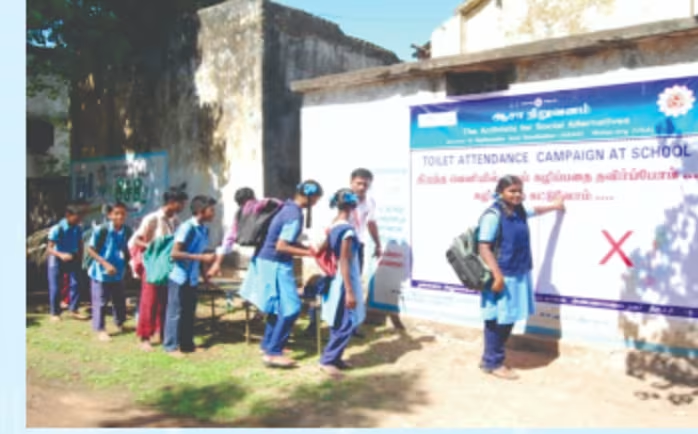
Mass awareness through exhibitions, rallies, signature campaigns, World Toilet Day and Global Handwashing Day, with toilet ball games, early morning triggering and snakes and ladders games.
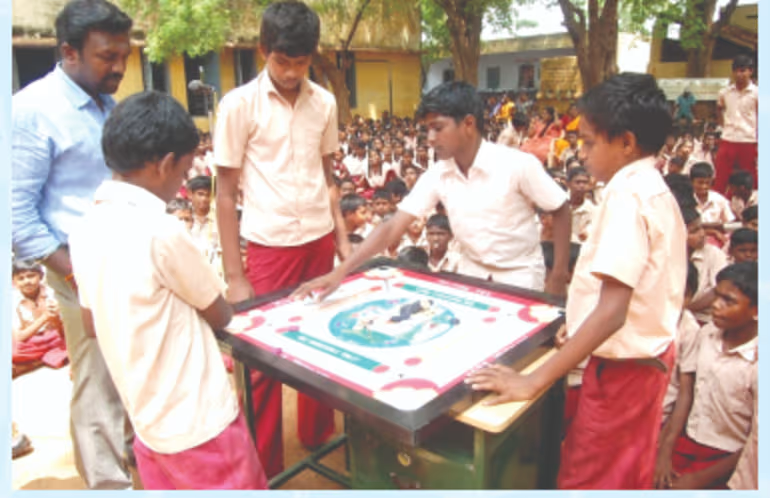
Children as change agents
Children’s clubs and health games
Children’s clubs have been formed to motivate children and inform them about safe water and sanitation. Several health games were also introduced to these children, who study in government schools. These children are targeted mainly because they have little or no access to hygienic facilities at their schools and fewer opportunities to use such play aids.
ASA targets these children to give them an opportunity to explore, learn and enjoy the health games it offers. ASA uses these children as change agents; they are the ones who connect the community and the organisation to bring safe water taps and sanitation improvements.
Building the team
Staff training and exposure programme
Exposure visit to Gram Uttan, Orissa
A two-day exposure visit was organised to Gram Uttan, an NGO based in Orissa. Different toilet models and innovative WASH techniques related to sanitation were learnt from this exposure visit.
Scaling up with Adhikar
A one-day visit was organised to Adhikar, an Orissa-based MFI, to learn about scaling up WASH for disadvantaged communities.
First place at the partners’ meet
The ASAS team participated in the partners’ meet held in Chennai. The ASAS programme won first place in the poster competition for the third time.
ASA training other NGOs on WASH
Gram Uttan visited ASA for a two-day exposure visit: one day of training and one day of field and branch visits. The Somarasampettai branch staff interacted with them and shared their MFI and WASH experiences.
A short film on water and sanitation
ASA hired a professional film-making unit to make a short film. Angela Studio, a Chennai-based film unit, is making this short film, which depicts the situation of water and sanitation in the targeted areas.
7 June 2017
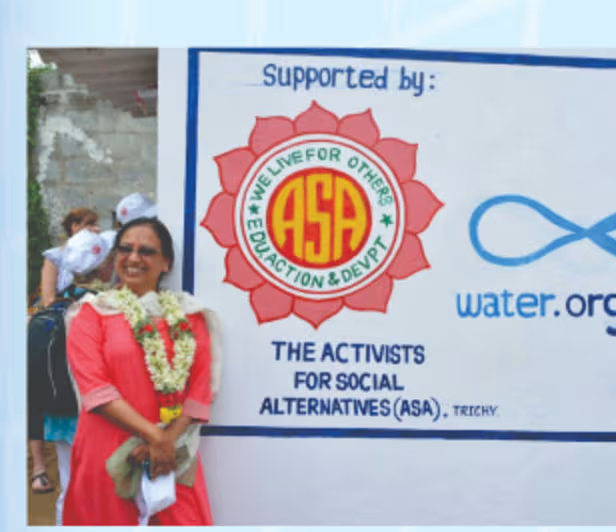
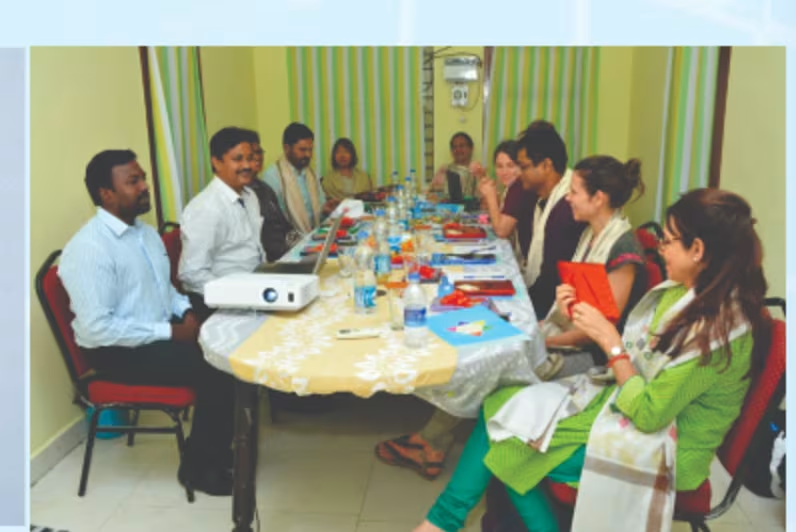
Project monitoring visit — IKEA and water.org
A project visit to ASA was organised by water.org and the IKEA team. A team of 10 patrons visited ASA on 7 June 2017 to understand the WASH interventions and stories of change. The visit included a field visit and a meeting with borrowers in JJ Nagar, a small village near Thirunindravur. On the same day, a separate staff meeting was held at the IBL Chennai region office with the ASA project team and MFI team. Project updates and achievements were presented, followed by a detailed discussion of key issues and challenges. The Managing Director of water.org, programme officers and delegates from IKEA took part in the visit, which was very successful.
A story of change
Toilet gives safety and dignity to women
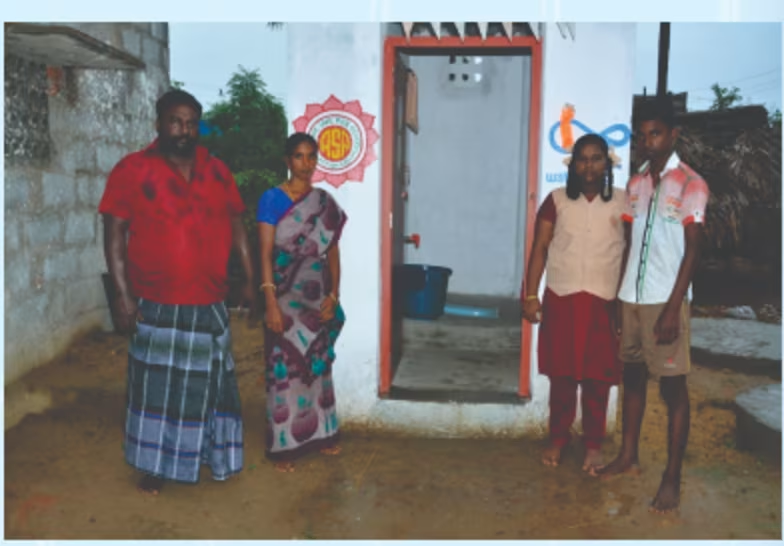
Mrs. Porkodi lives with her husband and two children in JJ Nagar village near Thirunindravur block in Tiruvallur district, 45 kilometres from Chennai city. The ASA project identified this village and has been working there since 2016. The change came from her daughter, who studies at a nearby government school. A month earlier, she took part in the WASH interventions organised by ASA in the school, where she learnt about the importance of toilets, hygienic practices and the safe disposal of sanitary napkins. Her daughter acted as a change agent, persuading her own mother to build a toilet at their doorstep.
After quick processing and approval of a sanitation loan by the Thirunindravur branch, she availed a loan of INR 30,000 for sanitation. She hadn’t expected the toilet to be completed within the loan amount, and she says this was thanks to a local mason who gave adequate support in constructing a twin-pit model. Provision was also made for cleaning agents and soap for handwashing. This twin-pit model has motivated other villagers to seek WASH loans to build similar low-cost toilets.
The villagers started approaching the GV branch office for new member enrolment and for hygienic toilets. Porkodi has not only ensured the well-being of her own family but has also become a changemaker in her native village, inspiring others to “Stop Open Defecation”.